Participatory Mapping of Local Cultural Heritage – Granada Heritage Lab
Description:
This activity was developed within the Community Participation and Community Mapping Heritage Lab of the #ASenseofEU project in Granada, Spain.
This activity introduced participatory mapping as a method for identifying and documenting the cultural heritage of local communities.
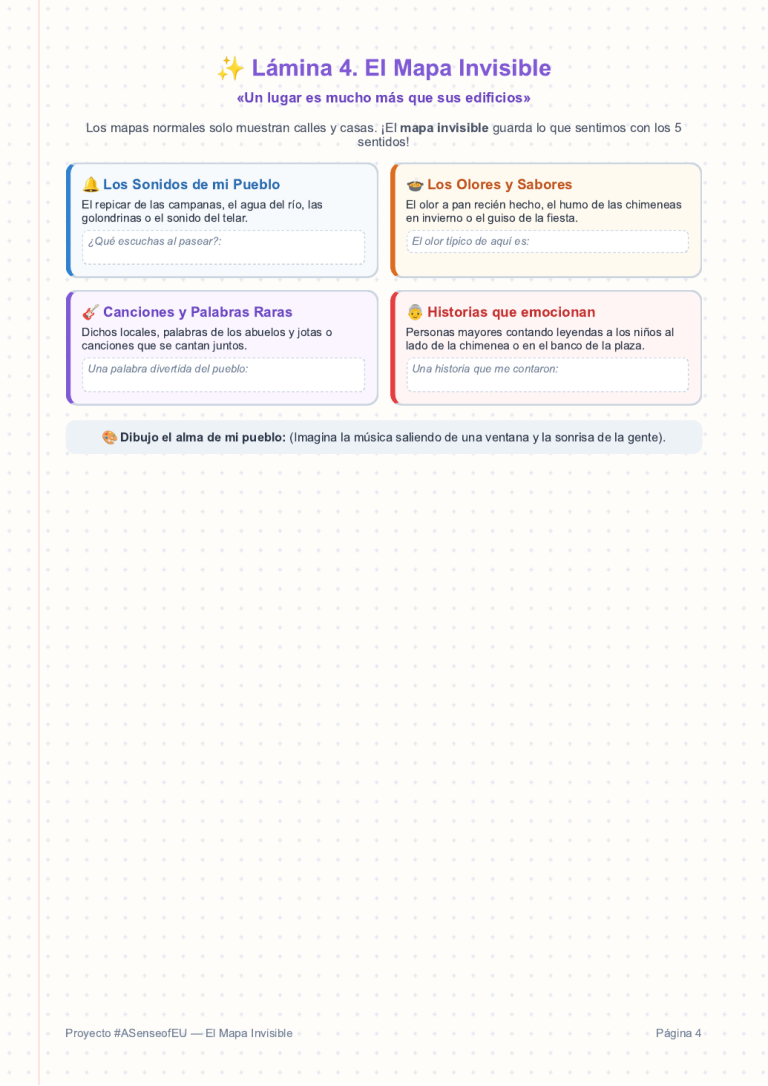
Participants explored how maps can represent not only physical places but also memories, traditions, sounds, cultural practices and personal experiences.
By connecting geographical locations with intangible cultural elements, the activity encouraged participants to explore the deeper meanings associated with their communities and strengthen their Sense of Place.
What do participants do in the activity?
- Identify places associated with local traditions.
- Explore cultural memories connected to specific locations.
- Represent stories, celebrations and traditional practices on maps.
- Identify sounds, smells and other sensory experiences.
- Exchange perspectives between generations.
- Discuss the importance of community participation in heritage mapping.
What do participants learn?
Participants learn how to:
- Apply participatory mapping techniques.
- Recognise tangible and intangible aspects of local heritage.
- Understand the relationship between place, memory and identity.
- Appreciate different perspectives on community heritage.
- Explore creative approaches to documenting local traditions.
Gallery
A worksheet exploring the intangible dimensions of a place, including sounds, smells, songs, expressions and memories.