Planning a Community-Based Heritage Tourism Experience – Granada Heritage Lab
Description:
This activity was developed within the Intangible Cultural Heritage-Based Tourism Heritage Lab of the #ASenseofEU project in Granada, Spain.
The Heritage Lab explored how local traditions, cultural practices, stories and community knowledge can contribute to the development of responsible tourism experiences while preserving the cultural identity of local communities.
The activity focuses on designing tourism experiences rooted in local cultural heritage.
An important aspect of developing a heritage-based tourism experience is understanding the different steps involved, from identifying local traditions and consulting community members to documenting cultural knowledge and presenting tourism proposals.
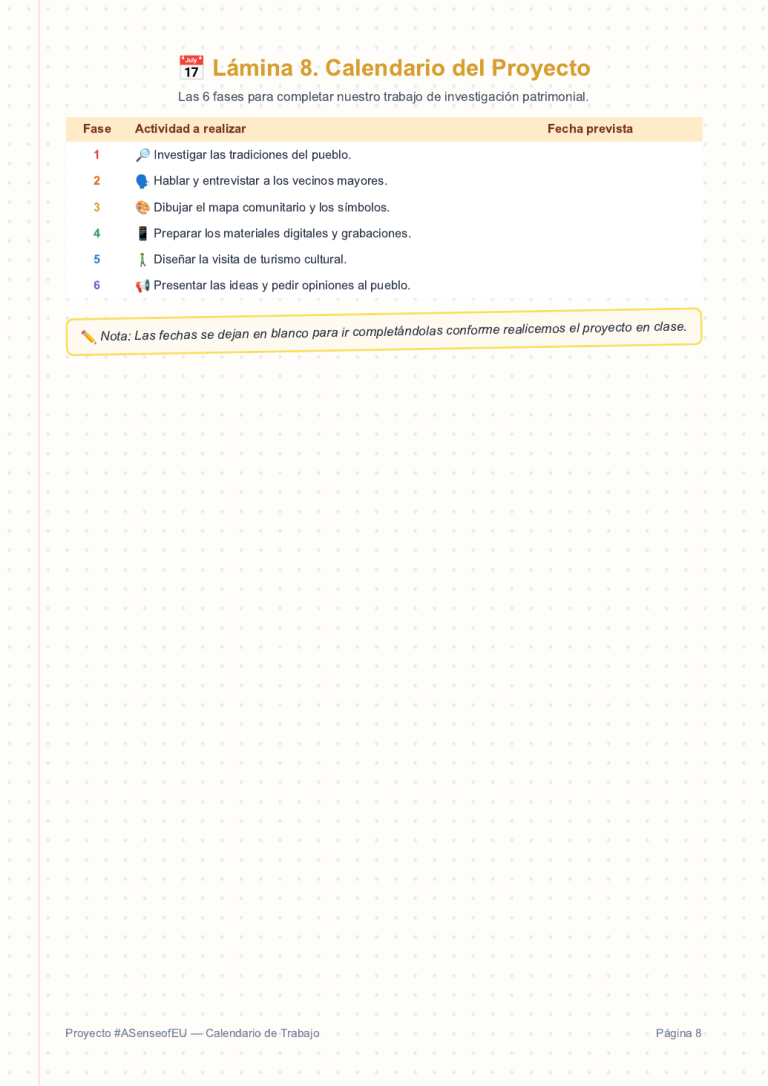
The educational material “Calendario del Proyecto” (Project Calendar) illustrates a six-stage process for developing a community heritage initiative. These stages include researching local traditions, interviewing older community members, creating a community map, preparing digital documentation, designing a cultural tourism experience and presenting the proposal to the community.
The material highlights how community participation, intergenerational learning and digital tools can contribute to developing tourism experiences that respect and promote local cultural heritage.
What do participants do in the activity?
- Identify the main stages involved in developing a community heritage initiative.
- Explore local traditions and cultural practices that could inspire tourism experiences.
- Consider the importance of interviewing older community members and documenting their knowledge.
- Identify opportunities for community mapping and digital heritage documentation.
- Organise the different stages of a heritage-based tourism proposal.
- Reflect on the importance of involving local communities throughout the process.
What do participants learn?
Participants learn how to:
- Understand the planning process behind community-based heritage tourism initiatives.
- Recognise the importance of researching and documenting local traditions.
- Appreciate the contribution of intergenerational knowledge exchange.
- Identify how community mapping and digital tools support heritage preservation.
- Organise activities into a structured project plan.
- Understand the importance of community participation in responsible tourism development.
Gallery
This worksheet illustrates six stages of a community heritage initiative, connecting cultural research, intergenerational interviews, community mapping, digital documentation and tourism planning.