Safeguarding Local Traditions Through Intergenerational Knowledge Exchange – Granada Heritage Lab
Description:
This activity was developed within the Intangible Cultural Heritage-Based Tourism Heritage Lab of the #ASenseofEU project in Granada, Spain.
This activity focuses on recognising cultural knowledge that continues to be transmitted within communities and identifying traditions that may be at risk of disappearing.
Local communities possess valuable Intangible Cultural Heritage, including traditional recipes, crafts, celebrations, oral histories and everyday cultural practices. However, changes in lifestyles and generational relationships can affect how this knowledge is shared and preserved.
The activity encourages participants to reflect on which traditions remain actively practised, which are becoming less common and how intergenerational collaboration can contribute to their safeguarding.
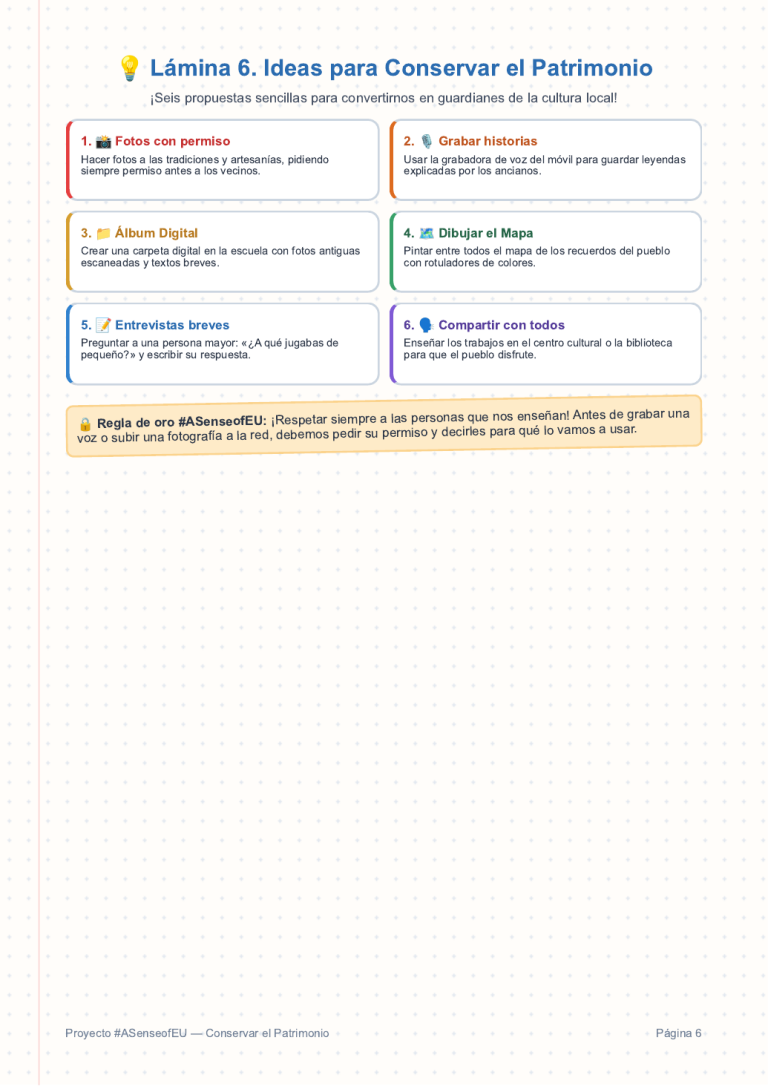
It also introduces practical ways of documenting cultural knowledge, including photography, audio recordings, interviews, digital collections and community storytelling.
By combining traditional knowledge with accessible digital tools, the activity illustrates how younger and older generations can work together to preserve and share their cultural heritage.
What do participants do in the activity?
- Identify traditions, cultural practices and knowledge associated with their communities.
- Distinguish between living traditions and knowledge at risk of disappearing.
- Discuss how cultural knowledge is transmitted between generations.
- Identify people who preserve valuable local knowledge.
- Prioritise traditions that could benefit from safeguarding initiatives.
- Explore practical documentation methods, such as interviews, photographs and audio recordings.
- Reflect on how younger and older generations can collaborate in heritage preservation.
What do participants learn?
Participants learn how to:
- Recognise the importance of safeguarding Intangible Cultural Heritage.
- Distinguish between living and at-risk cultural knowledge.
- Understand the role of intergenerational knowledge transmission.
- Identify opportunities for documenting local traditions.
- Explore accessible tools for cultural heritage preservation.
- Appreciate the importance of community participation and consent when documenting cultural knowledge.
Gallery
The educational material presents six practical approaches to safeguarding local cultural heritage, including photography, oral recordings, digital albums, community mapping, interviews and sharing cultural knowledge.